Historic Well (Chaupal) of Bandwar: The Village Gathering Place
A social hub older than living memory, featured in Prabhat Khabar
Narrated in English (Browser TTS)
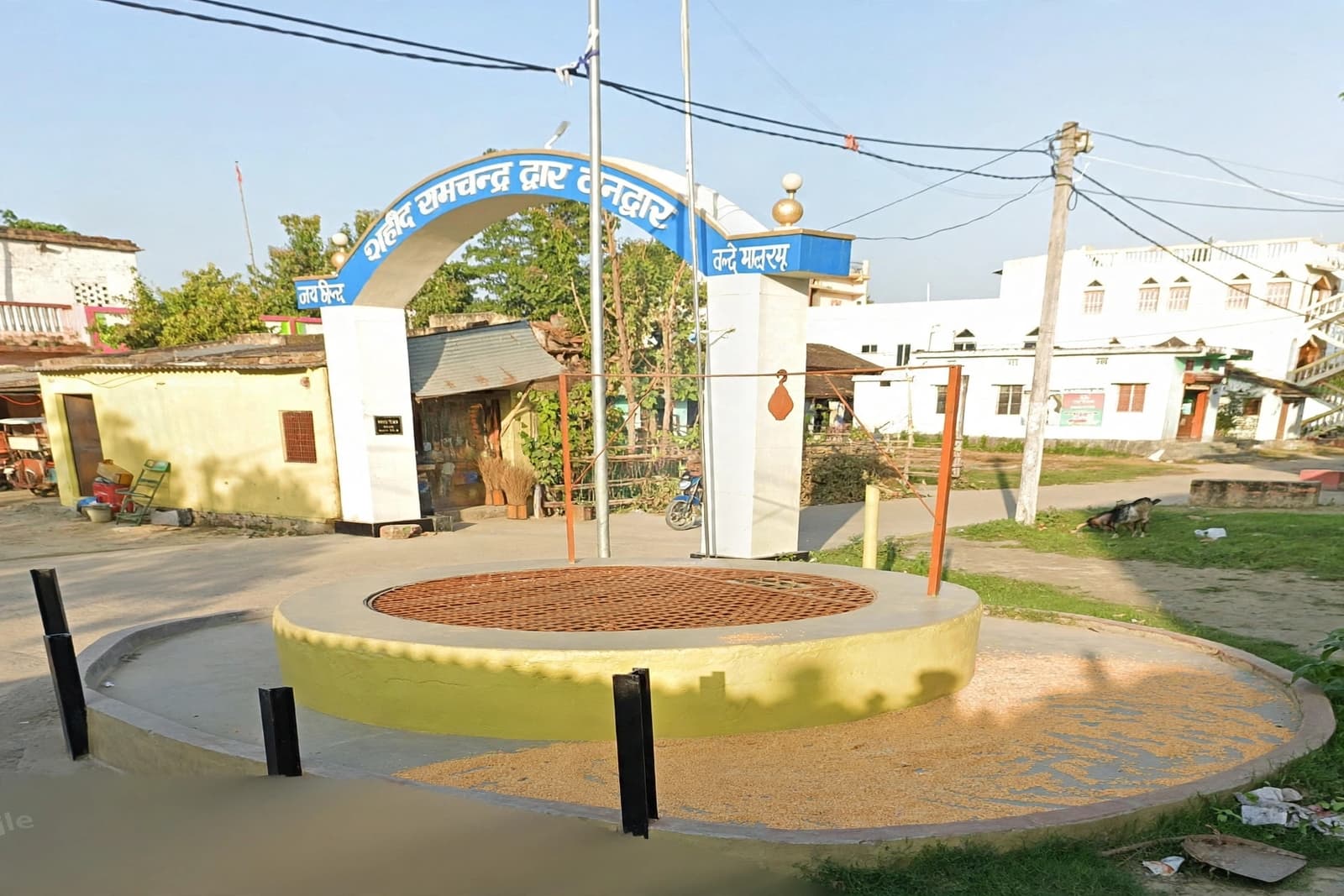
Bandwar's historic well has served as both a source of water and a gathering place — a chaupal — for generations. It was the subject of a feature in Prabhat Khabar in July 2026, which described it as 'still the centre of social dialogue and intellectual discussion in the village'. It sits near [[shivala-temple-bandwar|Shivala]] and the [[chandrashekhar-chowk-bandwar|Chandrashekhar Chowk]], and has been a centre of village life for as long as anyone remembers.
Overview
The Chaupal Tradition
Recent Renovation
Media Recognition
Present Day
Frequently Asked Questions
What is the historic well of Bandwar?
Why is it called the chaupal?
Is the well still used for drinking water?
What did Prabhat Khabar write about the well?
Where is the historic well located?
Read Next
Shivala: The Historic Shiva Temple of Bandwar
Shivala is the village's Shiva temple, standing in the centre of Bandwar, Begusarai, Bihar. It is one of the village's eight temples and has served as a place of worship for generations. Built entirely by village residents, without any government support, it stands in a grove of trees near the [[historic-well-chaupal-bandwar|historic well]] that anchors the village centre.
Chandrashekhar Chowk: Memorial of Begusarai's First Communist MLA
A village square in Bandwar with a statue of Chandrashekhar Singh — the first communist MLA from Barauni, and a defining figure in Begusarai's identity as 'the Leningrad of Bihar'. The chowk sits at a crossroads in the village centre, and its statue — under a canopy supported by red stone pillars — has become one of the most photographed features of Bandwar.
Burhi Gandak River: Bandwar's Lifeline and Adversary
The Burhi Gandak is a flood-prone river that flows along the western edge of Bandwar, in Begusarai district, Bihar. Situated in the fertile Indo-Gangetic plain, it is the largest tributary of the Ganga in the region. Its annual floods shaped the village's geography, its agriculture, and — most importantly — its name. The embankment built along the river, the [[bandh-embankment-bandwar|bandh]], is widely believed to be the source of the village's name: Bandwar.
The Bandh: Bandwar's Historic Flood Protection Embankment
The bandh is the embankment built along the Burhi Gandak to protect Bandwar from floods. It is widely believed that the village takes its name from this very structure — 'Bandh' becoming 'Bandwar'. It runs parallel to the [[burhi-gandak-river-bandwar|Burhi Gandak]] along the western edge of the village, and is the single most important piece of infrastructure in Bandwar.
Bada Krishna Mandir: The Larger Krishna Temple of Bandwar
The larger of Bandwar's two Krishna temples, Bada Krishna Mandir houses a Radha-Krishna idol and is a whitewashed building with an arched entrance and a handpump in its courtyard. It is closely associated with the village's [[janmashtami-mela-bandwar-bihar|Janmashtami Mela]], the 200-year-old fair held annually on Krishna's birth.
Jal Jeevan Mission Water Tower: Piped Water in Bandwar
A water tower built near Bandwar under the central government's Jal Jeevan Mission. It stands near the [[bandh-embankment-bandwar|bandh]] along the [[burhi-gandak-river-bandwar|Burhi Gandak]], drawing on the local groundwater. The tower is part of a massive effort to bring piped drinking water to households that previously relied entirely on hand-pumps and wells.
Mentioned In
- Maharishi Gautam Aadi Shakti Durga Mandir, Bandwar
- The Tolas of Bandwar: Mapping the Village's Social Fabric
- Community and Panchayat: How 22,000 People Govern Themselves
- Shri Adi Durga Sthan (Durga Mandir): The Main Durga Temple of Bandwar
- Bada Krishna Mandir: The Larger Krishna Temple of Bandwar
- Chandrashekhar Chowk: Memorial of Begusarai's First Communist MLA
- Baba Bhole Durgasthan Hanuman Mandir: Multi-Deity Temple of Bandwar
- Shivala: The Historic Shiva Temple of Bandwar