Bada Krishna Mandir: The Larger Krishna Temple of Bandwar
Housing a Radha-Krishna idol and linked to the historic Janmashtami Mela
Narrated in English (Browser TTS)
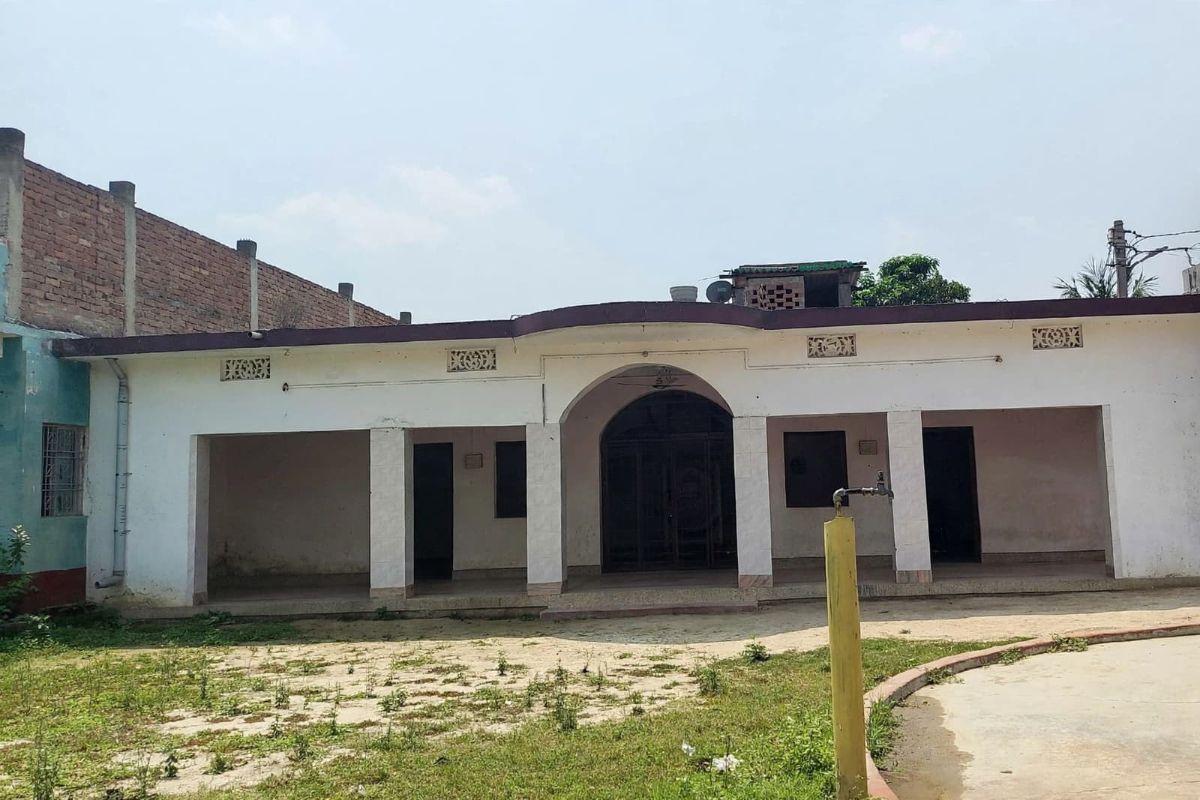
The larger of Bandwar's two Krishna temples, Bada Krishna Mandir houses a Radha-Krishna idol and is a whitewashed building with an arched entrance and a handpump in its courtyard. It is closely associated with the village's [[janmashtami-mela-bandwar-bihar|Janmashtami Mela]], the 200-year-old fair held annually on Krishna's birth.
Overview
The Deity
Festivals
Present Day
Frequently Asked Questions
What is the difference between Bada and Chhota Krishna Mandir?
What idol is in Bada Krishna Mandir?
What festivals are celebrated at Bada Krishna Mandir?
Is there a handpump at Bada Krishna Mandir?
Categories
Read Next
Chhota Krishna Mandir: The Ornate Krishna Temple of Bandwar
The smaller of Bandwar's two Krishna temples, Chhota Krishna Mandir is distinguished by its colourful scalloped arches, marble steps, and green and red side walls. It is reached by a flight of marble steps, and stands a short distance from the [[bada-krishna-mandir-bandwar|Bada Krishna Mandir]].
Ram Mandir Thakurbari: The Twin-Shikhara Temple of Bandwar
Bandwar's Ram temple, distinguished by its twin shikharas, is one of the most recognisable structures in the village. It is the site of the annual [[ram-katha-thakurbari-bandwar-2021|Ram Katha]] — the recitation of the Ramcharitmanas — and is especially striking against the evening sky at sunset.
Shivala: The Historic Shiva Temple of Bandwar
Shivala is the village's Shiva temple, standing in the centre of Bandwar, Begusarai, Bihar. It is one of the village's eight temples and has served as a place of worship for generations. Built entirely by village residents, without any government support, it stands in a grove of trees near the [[historic-well-chaupal-bandwar|historic well]] that anchors the village centre.
Bandwar Janmashtami Mela: Bihar's Oldest Fair & Mud-Pit Wrestling
The Bandwar Krishna Janmashtami Mela is a historic fair held annually in Bandwar, running for over two hundred years. Considered the oldest Janmashtami fair in Bihar, it is famous for its traditional mud-pit wrestling (Kushti), drawing wrestlers from across Bihar, Nepal, and beyond. Held at the village ground near the [[historic-well-chaupal-bandwar|chaupal]], the fair is deeply connected to the [[bada-krishna-mandir-bandwar|Bada Krishna Mandir]] and [[chhota-krishna-mandir-bandwar|Chhota Krishna Mandir]].
Baba Bhole Durgasthan Hanuman Mandir: Multi-Deity Temple of Bandwar
A temple in the centre of Bandwar dedicated to three deities — Baba Bhole (Shiva), Durga, and Hanuman. It is distinguished by its blue-grey shikhara, maroon walls, and an iron gate inscribed with 'Om Namah Shivaya'. It is one of the eight temples clustered in the village centre.
Historic Well (Chaupal) of Bandwar: The Village Gathering Place
Bandwar's historic well has served as both a source of water and a gathering place — a chaupal — for generations. It was the subject of a feature in Prabhat Khabar in July 2026, which described it as 'still the centre of social dialogue and intellectual discussion in the village'. It sits near [[shivala-temple-bandwar|Shivala]] and the [[chandrashekhar-chowk-bandwar|Chandrashekhar Chowk]], and has been a centre of village life for as long as anyone remembers.