Bandwar Janmashtami Mela: Bihar's Oldest Fair & Mud-Pit Wrestling
A historic fair running for over 200 years in Begusarai
Narrated in English (Browser TTS)
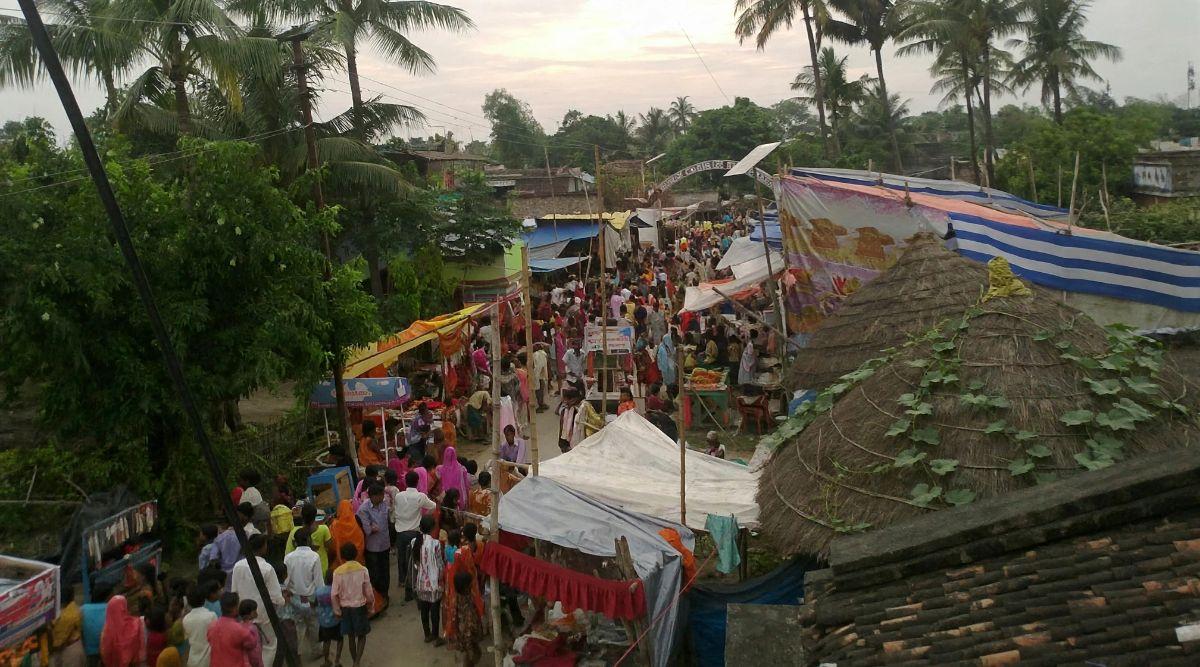
The Bandwar Krishna Janmashtami Mela is a historic fair held annually in Bandwar, running for over two hundred years. Considered the oldest Janmashtami fair in Bihar, it is famous for its traditional mud-pit wrestling (Kushti), drawing wrestlers from across Bihar, Nepal, and beyond. Held at the village ground near the [[historic-well-chaupal-bandwar|chaupal]], the fair is deeply connected to the [[bada-krishna-mandir-bandwar|Bada Krishna Mandir]] and [[chhota-krishna-mandir-bandwar|Chhota Krishna Mandir]].
A 200-Year-Old Legacy
The Heart of the Fair: Mud-Pit Wrestling
Local Belief and Community Funding
The Temple Connection
Recognition and Preservation
Frequently Asked Questions
How old is the Bandwar Janmashtami Mela?
What is the main attraction of the Janmashtami Mela?
Where is the Bandwar Janmashtami Mela held?
Who organises the Janmashtami Mela?
Is the Janmashtami Mela mentioned in the news?
Categories
Read Next
Kushti in Bandwar: The Traditional Mud-Pit Wrestling of Bihar
Kushti, or mud-pit wrestling, is the defining feature of the Bandwar [[janmashtami-mela-bandwar-bihar|Janmashtami fair]]. Wrestlers come from across Bihar — and from Rajasthan, Madhya Pradesh, and Nepal — to compete in the pit that is prepared fresh each year. There is no prize money — only the honour of having wrestled at Bandwar.
Chhath Puja in Bandwar: Celebrating Surya Dev at Burhi Gandak
Chhath Puja is the most significant festival in Bihar and the Mithila region, dedicated to Surya Dev (the Sun God) and Chhathi Maiya. In Bandwar, the festival is celebrated at the [[bandh-embankment-bandwar|bandh]] along the [[burhi-gandak-river-bandwar|Burhi Gandak]], with the entire village gathering on the riverbank. A large idol of Surya Dev, mounted on his chariot with seven horses, is set up at the bandh, and the village observes four days of rigorous fasting and Vedic rituals.
Ram Katha 2021 at Thakurbari: Ramcharitmanas Recitation in Bandwar
Once a year, the [[ram-mandir-thakurbari-bandwar|Ram Mandir Thakurbari]] hosts a Ram Katha — a multi-day public recitation of the Ramcharitmanas by a trained narrator. The 2021 edition was attended by the entire village, and was held under a pink-and-white striped pandal in the temple courtyard. The Katha is one of the most important religious events in the village calendar, reflecting the deep Vaishnavite tradition of the Mithila region.
Bada Krishna Mandir: The Larger Krishna Temple of Bandwar
The larger of Bandwar's two Krishna temples, Bada Krishna Mandir houses a Radha-Krishna idol and is a whitewashed building with an arched entrance and a handpump in its courtyard. It is closely associated with the village's [[janmashtami-mela-bandwar-bihar|Janmashtami Mela]], the 200-year-old fair held annually on Krishna's birth.
Chhota Krishna Mandir: The Ornate Krishna Temple of Bandwar
The smaller of Bandwar's two Krishna temples, Chhota Krishna Mandir is distinguished by its colourful scalloped arches, marble steps, and green and red side walls. It is reached by a flight of marble steps, and stands a short distance from the [[bada-krishna-mandir-bandwar|Bada Krishna Mandir]].
Historic Well (Chaupal) of Bandwar: The Village Gathering Place
Bandwar's historic well has served as both a source of water and a gathering place — a chaupal — for generations. It was the subject of a feature in Prabhat Khabar in July 2026, which described it as 'still the centre of social dialogue and intellectual discussion in the village'. It sits near [[shivala-temple-bandwar|Shivala]] and the [[chandrashekhar-chowk-bandwar|Chandrashekhar Chowk]], and has been a centre of village life for as long as anyone remembers.
Mentioned In
- Ram Katha 2021 at Thakurbari: Ramcharitmanas Recitation in Bandwar
- Kushti in Bandwar: The Traditional Mud-Pit Wrestling of Bihar
- Diwali in Bandwar: The Fiery Hukka-Pati & Mithila's Night of Kali
- The Economics of the Janmashtami Mela in Bandwar
- Community and Panchayat: How 22,000 People Govern Themselves
- SRVC Bandwar Volleyball: The Annual Clash at SNK Ground
- Shri Adi Durga Sthan (Durga Mandir): The Main Durga Temple of Bandwar
- Chhota Krishna Mandir: The Ornate Krishna Temple of Bandwar
- Bada Krishna Mandir: The Larger Krishna Temple of Bandwar
- Shaheed Ramchandra Dwar (Martyrs' Gate), Bandwar
- Ram Mandir Thakurbari: The Twin-Shikhara Temple of Bandwar
- Shahid Rajesh Memorial Cricket Tournament, Bandwar (2026)