Bandwar Village Archive

Kushti in Bandwar: The Traditional Mud-Pit Wrestling of Bihar

The heart of the historic Janmashtami fair
Verified by Bandwar Editor
| 2026-11-12
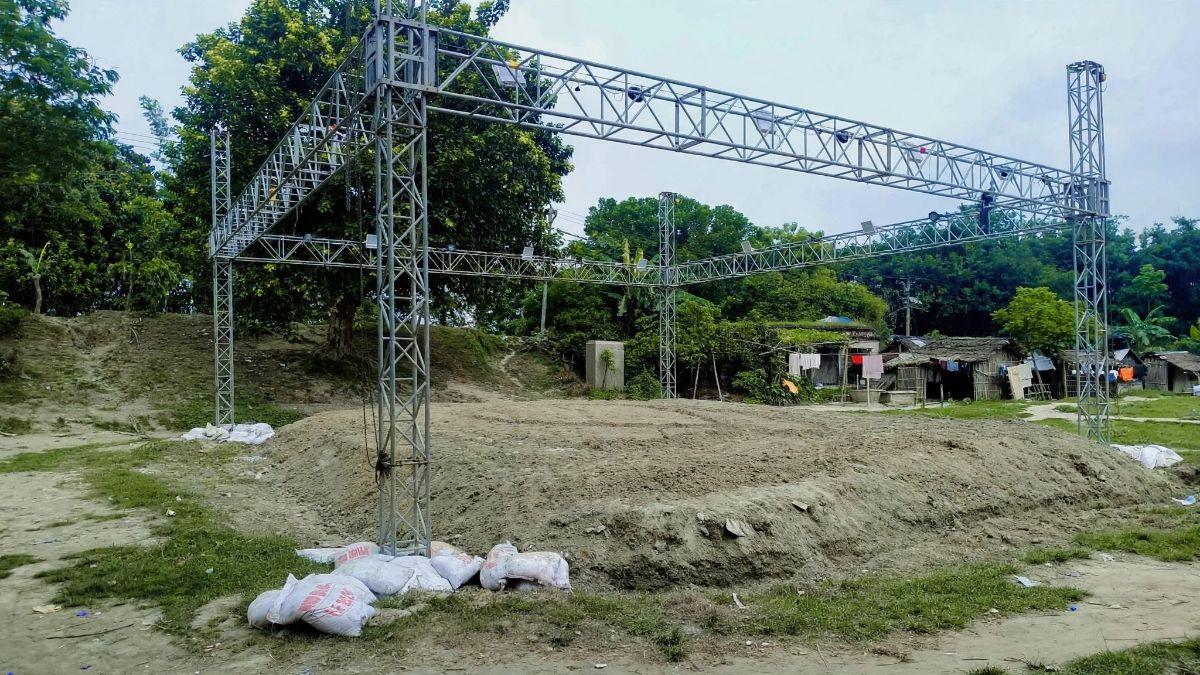
Wrestlers competing in the traditional mud-pit Kushti at the Janmashtami fair in Bandwar, Begusarai (2026)
View Full Size
Listen to this article

Narrated in English (Browser TTS)

Kushti, or mud-pit wrestling, is the defining feature of the Bandwar [[janmashtami-mela-bandwar-bihar|Janmashtami fair]]. Wrestlers come from across Bihar — and from Rajasthan, Madhya Pradesh, and Nepal — to compete in the pit that is prepared fresh each year. There is no prize money — only the honour of having wrestled at Bandwar.

Overview

Kushti — also called pehalwani or malla-yuddha — is the traditional form of mud-pit wrestling practised across North India. In Bandwar, it is the heart of the annual Janmashtami fair, and the reason wrestlers travel from across the subcontinent to the village each year. The kushti at Bandwar is not a modern sport — it is a continuation of a wrestling tradition that is described in classical Indian texts, and that has survived in rural India as both a sport and a discipline.

The Pit and the Akhada

Unlike the mat-based wrestling of modern gyms, kushti at Bandwar is practised in a pit of wet earth. The pit is dug fresh every year in the days before the fair. Village youths soften the earth, add water, and smooth it with their feet until it has the grip and give that wrestlers need. The preparation of the pit is itself a ritual. This tradition is closely linked to the 'Akhada' culture of Bihar, where mud pits have historically been centers of community life, discipline, and physical culture. In these Akhadas, wrestlers (pehlwans) train under the guidance of a guru, following a strict regimen of diet and exercise, often worshipping Lord Hanuman for strength.

The Wrestlers

Wrestlers come to Bandwar from across the region. Most are from Bihar, but the fair has also historically attracted wrestlers from Rajasthan, Madhya Pradesh, and — across the border — from Nepal. They come because they have heard of the fair, because their fathers and grandfathers wrestled here, because the pit at Bandwar has a reputation. The wrestlers are typically young men in their twenties, but older wrestlers — some in their forties — also participate. The matches are not organised by weight class — they are set up on the spot, based on the wrestlers' mutual agreement and the crowd's interest.

Honour Over Money

The most remarkable thing about the kushti at Bandwar is that there is no prize money. There is no trophy. There is only the honour of having wrestled at Bandwar — and the crowd, which surrounds the pit three or four deep and shouts itself hoarse for hours. This absence of monetary incentive is what gives the Bandwar kushti its particular character: the wrestlers are there because they want to be, not because they are being paid. The winning wrestlers are celebrated locally, and their names are remembered in the village for years afterwards.

Origins

Mud-pit wrestling has been practised in this region for centuries. It is described in classical Indian texts — in the Mahabharata, Bhima's wrestling matches are a central motif — and it has survived in rural India as both a sport and a discipline. The kushti at Bandwar is part of this longer tradition, and it is one of the few places in the region where the classical form of mud-pit wrestling is still practised at scale. The wrestlers who come to Bandwar often practise in their own village akhadas through the year, and the fair is their annual opportunity to test themselves against wrestlers from beyond their own circle.

Present Day

The kushti at the Bandwar Janmashtami fair continues to be held each year. It is not organised by any committee or funded by any sponsor — every household contributes what it can, and every generation passes on the responsibility to the next. In recent years, some local media coverage of the fair has highlighted the kushti, and the wrestlers who participate have occasionally been interviewed. But the tradition itself remains unchanged — a mud pit, a crowd, and the simple honour of having wrestled at Bandwar.

Frequently Asked Questions

What is kushti?
Kushti — also called pehalwani or malla-yuddha — is the traditional form of mud-pit wrestling practised across North India. In Bandwar, it is the main attraction of the annual Janmashtami fair.
Where do wrestlers come from for the Bandwar kushti?
Wrestlers come to Bandwar from across Bihar, and also from Rajasthan, Madhya Pradesh, and Nepal. They come because their fathers and grandfathers wrestled at Bandwar, and because the pit has a reputation.
Is there prize money in the Bandwar kushti?
No — there is no prize money or trophy. The only reward is the honour of having wrestled at Bandwar, and the recognition of the crowd. This absence of monetary incentive is what gives the kushti its particular character.
When does the Bandwar kushti take place?
The kushti takes place during the Janmashtami fair, which falls in August or September. The mud pit is prepared fresh each year in the days before the fair, and matches run from the afternoon into the evening.
Who prepares the wrestling pit?
The pit is prepared by village youths, who soften the earth, add water, and smooth it with their feet. The preparation is a collective effort, and it is often watched by village elders who remember how it was done in their own youth.

Categories

Read Next

Bandwar Janmashtami Mela: Bihar's Oldest Fair & Mud-Pit Wrestling

The Bandwar Krishna Janmashtami Mela is a historic fair held annually in Bandwar, running for over two hundred years. Considered the oldest Janmashtami fair in Bihar, it is famous for its traditional mud-pit wrestling (Kushti), drawing wrestlers from across Bihar, Nepal, and beyond. Held at the village ground near the [[historic-well-chaupal-bandwar|chaupal]], the fair is deeply connected to the [[bada-krishna-mandir-bandwar|Bada Krishna Mandir]] and [[chhota-krishna-mandir-bandwar|Chhota Krishna Mandir]].

Chhath Puja in Bandwar: Celebrating Surya Dev at Burhi Gandak

Chhath Puja is the most significant festival in Bihar and the Mithila region, dedicated to Surya Dev (the Sun God) and Chhathi Maiya. In Bandwar, the festival is celebrated at the [[bandh-embankment-bandwar|bandh]] along the [[burhi-gandak-river-bandwar|Burhi Gandak]], with the entire village gathering on the riverbank. A large idol of Surya Dev, mounted on his chariot with seven horses, is set up at the bandh, and the village observes four days of rigorous fasting and Vedic rituals.

Shahid Rajesh Memorial Cricket Tournament, Bandwar (2026)

The Shahid Rajesh Memorial Cricket Tournament is played annually at the Bandwar village ground, in memory of a young man from the village who gave his life in service. The 2026 edition was won by Shivam-11, who defeated Bagras-11 by 74 runs in the final. The tournament is organised by Vikram Singh, and is one of the village's most important sporting events.

Bada Krishna Mandir: The Larger Krishna Temple of Bandwar

The larger of Bandwar's two Krishna temples, Bada Krishna Mandir houses a Radha-Krishna idol and is a whitewashed building with an arched entrance and a handpump in its courtyard. It is closely associated with the village's [[janmashtami-mela-bandwar-bihar|Janmashtami Mela]], the 200-year-old fair held annually on Krishna's birth.

Historic Well (Chaupal) of Bandwar: The Village Gathering Place

Bandwar's historic well has served as both a source of water and a gathering place — a chaupal — for generations. It was the subject of a feature in Prabhat Khabar in July 2026, which described it as 'still the centre of social dialogue and intellectual discussion in the village'. It sits near [[shivala-temple-bandwar|Shivala]] and the [[chandrashekhar-chowk-bandwar|Chandrashekhar Chowk]], and has been a centre of village life for as long as anyone remembers.

Shaheed Ramchandra Dwar (Martyrs' Gate), Bandwar

The main entrance gate to Bandwar village, named in memory of Ramchandra ji — a martyr from the village. Built under the initiative of Girija Singh, a resident of Bandwar, the gate stands at the point where the road from Begusarai enters the village. It is inscribed on both sides with 'Jai Hind' and 'Bharat Mata', and has become one of the most recognisable structures in Bandwar.

Something is incorrect?

If you have additional details, let us know.

Suggest an Edit
Last updated: 2026-11-12Source: Bandwar Village Archive