Bandwar Village Archive

Chhath Puja in Bandwar: Celebrating Surya Dev at Burhi Gandak

Bihar's most important festival, celebrated at the village bandh
Verified by Admin
| 2026-11-17
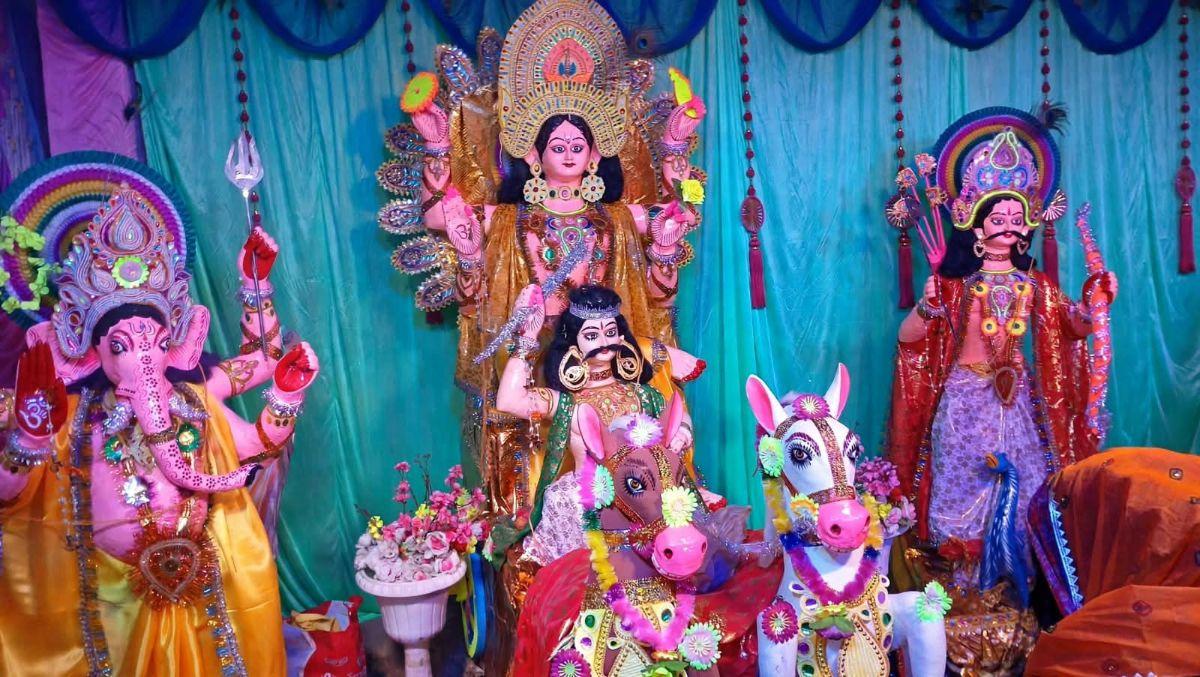
Surya Dev idol on his seven-horse chariot at the bandh during Chhath Puja in Bandwar, Begusarai (2026)
View Full Size
Listen to this article

Narrated in English (Browser TTS)

Chhath Puja is the most significant festival in Bihar and the Mithila region, dedicated to Surya Dev (the Sun God) and Chhathi Maiya. In Bandwar, the festival is celebrated at the [[bandh-embankment-bandwar|bandh]] along the [[burhi-gandak-river-bandwar|Burhi Gandak]], with the entire village gathering on the riverbank. A large idol of Surya Dev, mounted on his chariot with seven horses, is set up at the bandh, and the village observes four days of rigorous fasting and Vedic rituals.

Overview

Chhath Puja is the most important festival of Bihar — more significant, in popular practice, than Diwali or Holi. It is dedicated to Surya Dev (the Sun God) and Chhathi Maiya (also known as Usha, his sister/wife), and is observed over four days with strict fasting and Vedic ritual. The festival has no priestly intermediary — devotees pray directly to the sun. In Bandwar, the festival is celebrated at the bandh along the Burhi Gandak, and it is the single largest gathering of the village in the course of the year.

The Four-Day Ritual

The four-day festival begins with Nahay-Khay, when devotees bathe in the river and eat a special meal of rice, chana dal, and kaddu (bottle gourd). The second day is Kharna, when a day-long fast is broken in the evening with roti and kheer. The third day — Sandhya Arghya — is the most important: as the sun sets, devotees stand in the water and offer prayers to the setting sun. The fourth day is Usha Arghya — the same ritual repeated at sunrise, ending the fast. Throughout the four days, devotees observe strict rules of cleanliness and abstinence, and the festival's rituals are considered among the most demanding of any Hindu observance.

The Prasad and Thekua

The prasad prepared for Chhath is elaborate and strictly vegetarian. It includes thekua (a wheat-and-jaggery biscuit), kheer, fruits (especially sugarcane and banana), and coconut. The prasad is prepared on wood fire in a clean, ritualised manner, and is offered to the sun on bamboo soops (trays). The preparation of thekua is a family activity — women typically gather in the days before the festival to make the biscuits in large batches, and the thekua from different households is exchanged as a gesture of goodwill.

At Bandwar's Bandh

At Bandwar, Chhath is celebrated by the entire village. Devotees gather at the bandh — the embankment along the Burhi Gandak — before sunrise and sunset. A large idol of Surya Dev, mounted on his chariot with seven horses, is set up at the bandh. The festival draws villagers from across Bandwar, and also from the surrounding villages, many of whom come to offer prayers at the same spot their parents and grandparents used. The evening arghya is the more crowded of the two — thousands of villagers stand on the slope of the bandh and in the shallow water below, creating one of the most striking sights of the rural Bihar festival calendar.

A Note on Community and Equality

Chhath is unusual among Hindu festivals in that it has no priestly intermediary — devotees pray directly to the sun. In Bandwar, as elsewhere in Bihar, the festival is one of the few occasions when everyone — from the Mahadalit basti to the village centre — stands together on the same riverbank, offering the same prayers. The festival's rituals are observed by rich and poor alike, and the shared space of the bandh becomes, for those few days, a space of unusual equality. This aspect of Chhath — its refusal of hierarchy — is one of the reasons it has become, over the past few decades, one of Bihar's most widely observed festivals.

Frequently Asked Questions

What is Chhath Puja?
Chhath Puja is a Vedic festival dedicated to Surya Dev (the Sun God) and Chhathi Maiya. It is observed over four days with strict fasting and ritual, and is celebrated at the bandh along the Burhi Gandak in Bandwar.
When is Chhath Puja celebrated?
Chhath Puja falls in the Kartik month of the Hindu calendar, usually in October or November. It begins on the sixth day after Diwali and lasts for four days.
Where is Chhath celebrated in Bandwar?
Chhath is celebrated at the bandh — the embankment along the Burhi Gandak river, on the western edge of Bandwar. A large idol of Surya Dev, mounted on his chariot with seven horses, is set up at the bandh for the festival.
Why does Chhath have no priest?
Chhath is unusual among Hindu festivals in that it has no priestly intermediary — devotees pray directly to the sun. This is one of the reasons the festival is observed across caste and community lines in Bihar.
What prasad is prepared for Chhath?
The prasad includes thekua (a wheat-and-jaggery biscuit), kheer, fruits (especially sugarcane and banana), and coconut. It is prepared on wood fire and offered to the sun on bamboo soops (trays).

Read Next

Sama Chakeva: Mithila's Festival of Siblings and Migratory Birds

Sama Chakeva is a vibrant folk festival celebrated in the Mithila region, including Bandwar, right after Chhath Puja. It celebrates the deep bond between brothers and sisters. Sisters create colourful clay idols of Sama and Chakeva (symbolizing migratory birds) and perform rituals, sing traditional Maithili songs, and eventually submerge the idols in the river.

Bandwar Janmashtami Mela: Bihar's Oldest Fair & Mud-Pit Wrestling

The Bandwar Krishna Janmashtami Mela is a historic fair held annually in Bandwar, running for over two hundred years. Considered the oldest Janmashtami fair in Bihar, it is famous for its traditional mud-pit wrestling (Kushti), drawing wrestlers from across Bihar, Nepal, and beyond. Held at the village ground near the [[historic-well-chaupal-bandwar|chaupal]], the fair is deeply connected to the [[bada-krishna-mandir-bandwar|Bada Krishna Mandir]] and [[chhota-krishna-mandir-bandwar|Chhota Krishna Mandir]].

Burhi Gandak River: Bandwar's Lifeline and Adversary

The Burhi Gandak is a flood-prone river that flows along the western edge of Bandwar, in Begusarai district, Bihar. Situated in the fertile Indo-Gangetic plain, it is the largest tributary of the Ganga in the region. Its annual floods shaped the village's geography, its agriculture, and — most importantly — its name. The embankment built along the river, the [[bandh-embankment-bandwar|bandh]], is widely believed to be the source of the village's name: Bandwar.

The Bandh: Bandwar's Historic Flood Protection Embankment

The bandh is the embankment built along the Burhi Gandak to protect Bandwar from floods. It is widely believed that the village takes its name from this very structure — 'Bandh' becoming 'Bandwar'. It runs parallel to the [[burhi-gandak-river-bandwar|Burhi Gandak]] along the western edge of the village, and is the single most important piece of infrastructure in Bandwar.

Historic Well (Chaupal) of Bandwar: The Village Gathering Place

Bandwar's historic well has served as both a source of water and a gathering place — a chaupal — for generations. It was the subject of a feature in Prabhat Khabar in July 2026, which described it as 'still the centre of social dialogue and intellectual discussion in the village'. It sits near [[shivala-temple-bandwar|Shivala]] and the [[chandrashekhar-chowk-bandwar|Chandrashekhar Chowk]], and has been a centre of village life for as long as anyone remembers.

Jal Jeevan Mission Water Tower: Piped Water in Bandwar

A water tower built near Bandwar under the central government's Jal Jeevan Mission. It stands near the [[bandh-embankment-bandwar|bandh]] along the [[burhi-gandak-river-bandwar|Burhi Gandak]], drawing on the local groundwater. The tower is part of a massive effort to bring piped drinking water to households that previously relied entirely on hand-pumps and wells.

Something is incorrect?

If you have additional details, let us know.

Suggest an Edit
Last updated: 2026-11-17Source: Bandwar Village Archive