Bandwar Village Archive

The Bandh: Bandwar's Historic Flood Protection Embankment

The structure that gave Bandwar its name and saved it from the Burhi Gandak
Verified by Ravi Raj
| 2026-11-02
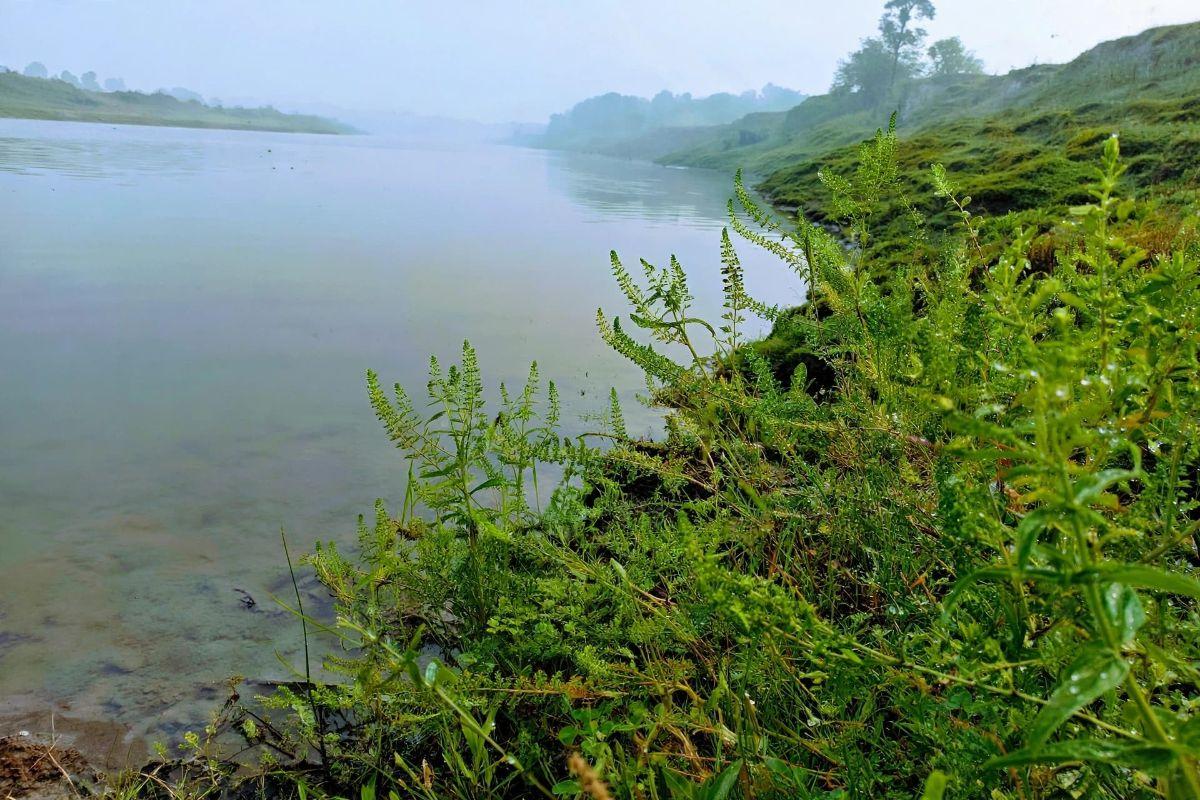
The bandh embankment along the Burhi Gandak river protecting Bandwar village, Begusarai (2026)
View Full Size
Listen to this article

Narrated in English (Browser TTS)

The bandh is the embankment built along the Burhi Gandak to protect Bandwar from floods. It is widely believed that the village takes its name from this very structure — 'Bandh' becoming 'Bandwar'. It runs parallel to the [[burhi-gandak-river-bandwar|Burhi Gandak]] along the western edge of the village, and is the single most important piece of infrastructure in Bandwar.

Overview

The bandh is the long embankment that runs parallel to the Burhi Gandak river, along the western edge of Bandwar. It was built by the village community generations ago to keep the river from flooding the village — and it is, in all likelihood, the origin of the village's name. The bandh is more than a piece of infrastructure: it is the physical fact that made Bandwar possible. Without it, the village would not exist in its present form. Every house, field, and lane in Bandwar owes its existence, indirectly, to the bandh.

Why It Was Built

The Burhi Gandak floods almost every year. Without protection, the village's homes, fields, and roads would be submerged for weeks at a time. The bandh — a raised earthen embankment — redirects the floodwaters and protects the village from the worst of the flooding. The logic of the bandh is simple: by raising a wall of earth between the river and the village, the floodwaters are forced to flow elsewhere. But the engineering required to make this work — the slope of the embankment, the quality of the soil, the placement of drainage channels — is far from simple, and the village's original builders had to get it right, or the village would have been flooded every year.

The Name

The most widely accepted theory about the village's name is that 'Bandwar' is derived from 'Bandh'. In the local dialect, a bandh-waar — a place protected by an embankment — would naturally have been shortened to 'Bandwar'. This theory is supported by the fact that the bandh is the single most distinctive feature of the village's landscape, and that the villages along the Burhi Gandak that do not have embankments have names that are not derived from 'bandh'. The name of the village, in other words, is a record of the decision to build the bandh — a decision taken by the village's ancestors, and one that has shaped everything that has happened since.

The Landscape

The bandh is one of the most striking features of Bandwar's landscape. From its top, on a clear morning, one can see the entire length of the village on one side, and the wide, still waters of the Burhi Gandak on the other. The embankment is planted with trees in places, and its slopes are covered in grass during the monsoon months. Wildflowers grow along its banks in the cooler months, and it is a favourite walking route for villagers in the early morning and evening. During Chhath Puja, the bandh becomes the site of the village's most important religious observance — thousands of villagers gather on its slope to offer prayers to Surya Dev as the sun sets and rises.

Present Day

The bandh continues to serve its original purpose — flood protection — and has been reinforced over the years by the state's water resources department. But it is also more than that. It is a landmark, a walking path, and the physical embodiment of the village's name. The Jal Jeevan Mission water tower stands near the bandh, drawing on groundwater connected to the river's aquifer. The embankment is also the site of the September 2025 diarrhea outbreak's aftermath — the health camp was held a short distance from its slopes. In this way, the bandh continues to be the stage on which many of the village's most important events — from religious festivals to public health crises — are played out.

Frequently Asked Questions

What is the bandh?
The bandh is the embankment built along the Burhi Gandak river, running parallel to it along the western edge of Bandwar. It was built by the village community generations ago to protect the village from the river's annual floods.
How did the bandh give Bandwar its name?
The most widely accepted theory is that 'Bandwar' derives from 'Bandh'. In the local dialect, a bandh-waar — a place protected by an embankment — would naturally have been shortened to 'Bandwar'.
Who built the bandh?
The bandh was built by the village community generations ago — before any government involvement. It has since been reinforced over the years by the state's water resources department.
What happens on the bandh during Chhath Puja?
During Chhath Puja — Bihar's most important festival — thousands of villagers gather on the slope of the bandh to offer prayers to Surya Dev (the Sun God) at sunset and sunrise. The bandh is the main venue for the festival in Bandwar.
Does the bandh prevent all flooding in Bandwar?
No — the bandh mitigates much of the damage from the Burhi Gandak's annual floods, but the village has still experienced flooding repeatedly. The bandh is a crucial protection, but it is not a complete solution.

Read Next

Burhi Gandak River: Bandwar's Lifeline and Adversary

The Burhi Gandak is a flood-prone river that flows along the western edge of Bandwar, in Begusarai district, Bihar. Situated in the fertile Indo-Gangetic plain, it is the largest tributary of the Ganga in the region. Its annual floods shaped the village's geography, its agriculture, and — most importantly — its name. The embankment built along the river, the [[bandh-embankment-bandwar|bandh]], is widely believed to be the source of the village's name: Bandwar.

Chhath Puja in Bandwar: Celebrating Surya Dev at Burhi Gandak

Chhath Puja is the most significant festival in Bihar and the Mithila region, dedicated to Surya Dev (the Sun God) and Chhathi Maiya. In Bandwar, the festival is celebrated at the [[bandh-embankment-bandwar|bandh]] along the [[burhi-gandak-river-bandwar|Burhi Gandak]], with the entire village gathering on the riverbank. A large idol of Surya Dev, mounted on his chariot with seven horses, is set up at the bandh, and the village observes four days of rigorous fasting and Vedic rituals.

Jal Jeevan Mission Water Tower: Piped Water in Bandwar

A water tower built near Bandwar under the central government's Jal Jeevan Mission. It stands near the [[bandh-embankment-bandwar|bandh]] along the [[burhi-gandak-river-bandwar|Burhi Gandak]], drawing on the local groundwater. The tower is part of a massive effort to bring piped drinking water to households that previously relied entirely on hand-pumps and wells.

2025 Bandwar Diarrhea Outbreak: Water Crisis and Public Health Failure

In September 2025, a severe diarrhea outbreak in Bandwar village, Begusarai, claimed over 10 lives in 15 days. The crisis was concentrated in Wards 1 and 2 (Mahadalit basti) and exposed the village's lack of clean piped water and sanitation. A health camp at [[gps-bandwar-musahri-school|Musahri Tola]] treated 26 patients and surveyed 293 households, accelerating the demand for the [[jal-jeevan-mission-water-tower-bandwar|Jal Jeevan Mission]] pipeline network.

Shaheed Ramchandra Dwar (Martyrs' Gate), Bandwar

The main entrance gate to Bandwar village, named in memory of Ramchandra ji — a martyr from the village. Built under the initiative of Girija Singh, a resident of Bandwar, the gate stands at the point where the road from Begusarai enters the village. It is inscribed on both sides with 'Jai Hind' and 'Bharat Mata', and has become one of the most recognisable structures in Bandwar.

Historic Well (Chaupal) of Bandwar: The Village Gathering Place

Bandwar's historic well has served as both a source of water and a gathering place — a chaupal — for generations. It was the subject of a feature in Prabhat Khabar in July 2026, which described it as 'still the centre of social dialogue and intellectual discussion in the village'. It sits near [[shivala-temple-bandwar|Shivala]] and the [[chandrashekhar-chowk-bandwar|Chandrashekhar Chowk]], and has been a centre of village life for as long as anyone remembers.

Something is incorrect?

If you have additional details, let us know.

Suggest an Edit
Last updated: 2026-11-02Source: Bandwar Village Archive