Bandwar Village Archive

Community and Panchayat: How 22,000 People Govern Themselves

The role of the Mukhiya, Ward Members, and Shramdaan in Bandwar
Verified by Bandwar Editor
| 2026-11-12
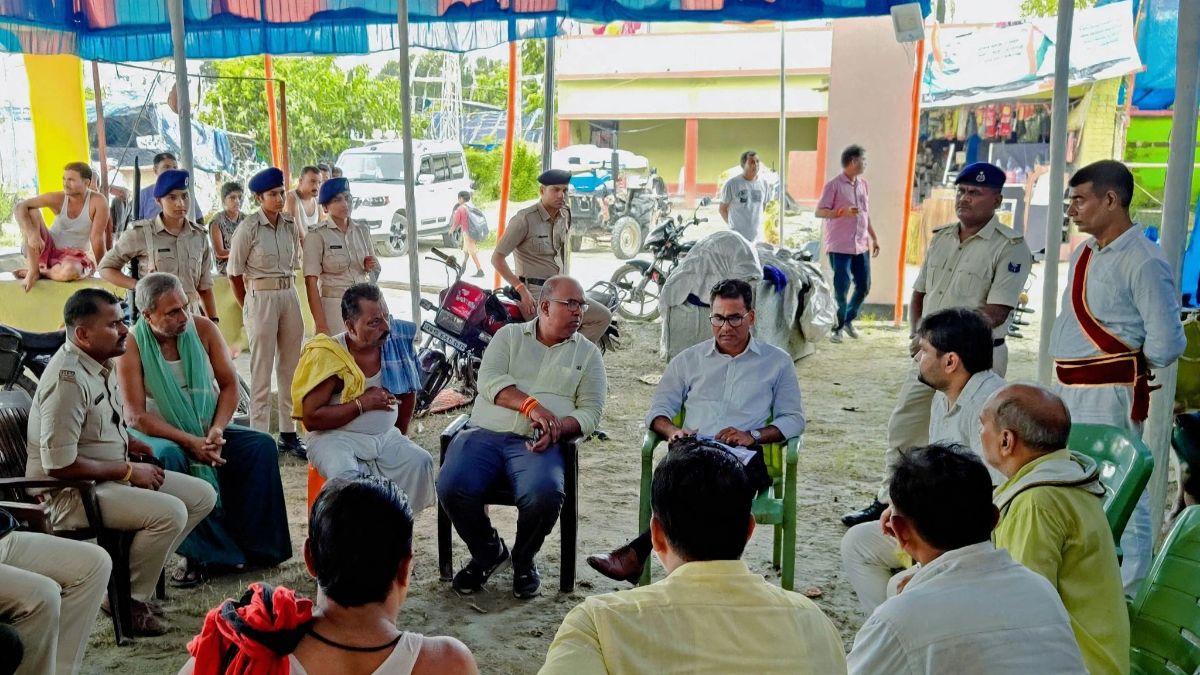
Bandwar Gram Panchayat office building in Begusarai, Bihar (2026)
View Full Size
Listen to this article

Narrated in English (Browser TTS)

With a population of roughly 22,000 across 17 wards and diverse Tolas like Musahri, Kunjartoli, and Chaubatta, Bandwar's local governance is managed by the Gram Panchayat. However, beyond the formal system, the village runs on a deep-rooted tradition of community participation and 'Shramdaan' (voluntary labour).

The Formal System: Gram Panchayat

Bandwar's administration falls under the Bihar Panchayati Raj system. The village is divided into 17 wards spanning areas from Musahri to Malha, each electing a Ward Member. These members, along with the Mukhiya (village head), manage the allocation of funds from the state government — including the 15th Finance Commission grants and MPLAD funds. They oversee infrastructure projects, from the village roads to the distribution of funds for schemes like the Jal Jeevan Mission.

The Real Power: Shramdaan

However, to understand Bandwar, one must look beyond the government office. The true engine of the village is 'Shramdaan' — the voluntary contribution of labour. The Bandwar Bandh that protects the village from the Burhi Gandak was built by the ancestors of the village through community effort. The Janmashtami Mela, which attracts thousands of people, is organized entirely without government help. Whether a family is from Baraitoli, Punabas, or Bharmpura, every household contributes what it can — be it grain, money, or physical labour. This collective spirit is the real government of Bandwar.

The Chaupal and Dispute Resolution

For generations, the historic well and chaupal has served as the village's informal court. Before a land dispute or a family quarrel goes to the police or the formal Panchayat, the elders of the village gather at the Chaupal to resolve it. Similarly, elders within individual Tolas (like Chaubatta or Dhanuktoli) often mediate local issues before they escalate. In a village of 22,000 people, this traditional system of social mediation is crucial for maintaining harmony.

The 2025 Health Crisis Response

The 2025 diarrhea outbreak exposed the limits of local governance. Villagers from Musahri Tola had to demand action from the district administration, and local leaders played a key role in bringing the health camp to Musahri Tola. It showed that while the community can build temples and organize fairs through Shramdaan, major health and water infrastructure still requires the state government's intervention.

Frequently Asked Questions

How is Bandwar village governed?
Bandwar is governed by a Gram Panchayat, divided into 17 wards. It has an elected Mukhiya and Ward Members who manage local administration and government funds.
What is Shramdaan in Bandwar?
Shramdaan is the tradition of voluntary community labour. In Bandwar, it is used to maintain the embankment (bandh), organize the Janmashtami Mela, and maintain village temples.
What is the role of the Chaupal in village governance?
The historic Chaupal (well area) serves as a traditional gathering place where village elders resolve disputes and discuss community matters, acting as an informal local court.

Read Next

Bandwar Demographics: The 17 Wards and a Growing Population

Bandwar is divided into 17 administrative wards, reflecting a rapidly growing population. While the 2011 Census recorded 12,943 residents, local estimates for 2026 place the population near 22,000. This rapid growth has transformed the village's social fabric, creating a high demand for infrastructure, schools, and healthcare across its numerous Tolas.

The Bandh: Bandwar's Historic Flood Protection Embankment

The bandh is the embankment built along the Burhi Gandak to protect Bandwar from floods. It is widely believed that the village takes its name from this very structure — 'Bandh' becoming 'Bandwar'. It runs parallel to the [[burhi-gandak-river-bandwar|Burhi Gandak]] along the western edge of the village, and is the single most important piece of infrastructure in Bandwar.

Bandwar Janmashtami Mela: Bihar's Oldest Fair & Mud-Pit Wrestling

The Bandwar Krishna Janmashtami Mela is a historic fair held annually in Bandwar, running for over two hundred years. Considered the oldest Janmashtami fair in Bihar, it is famous for its traditional mud-pit wrestling (Kushti), drawing wrestlers from across Bihar, Nepal, and beyond. Held at the village ground near the [[historic-well-chaupal-bandwar|chaupal]], the fair is deeply connected to the [[bada-krishna-mandir-bandwar|Bada Krishna Mandir]] and [[chhota-krishna-mandir-bandwar|Chhota Krishna Mandir]].

Historic Well (Chaupal) of Bandwar: The Village Gathering Place

Bandwar's historic well has served as both a source of water and a gathering place — a chaupal — for generations. It was the subject of a feature in Prabhat Khabar in July 2026, which described it as 'still the centre of social dialogue and intellectual discussion in the village'. It sits near [[shivala-temple-bandwar|Shivala]] and the [[chandrashekhar-chowk-bandwar|Chandrashekhar Chowk]], and has been a centre of village life for as long as anyone remembers.

Something is incorrect?

If you have additional details, let us know.

Suggest an Edit
Last updated: 2026-11-12Source: Bandwar Village Archive