Bandwar Village Archive

Bandwar Demographics: The 17 Wards and a Growing Population

How a village of 12,000 in 2011 became an estimated 22,000 by 2026
Verified by Bandwar Editor
| 2026-11-12
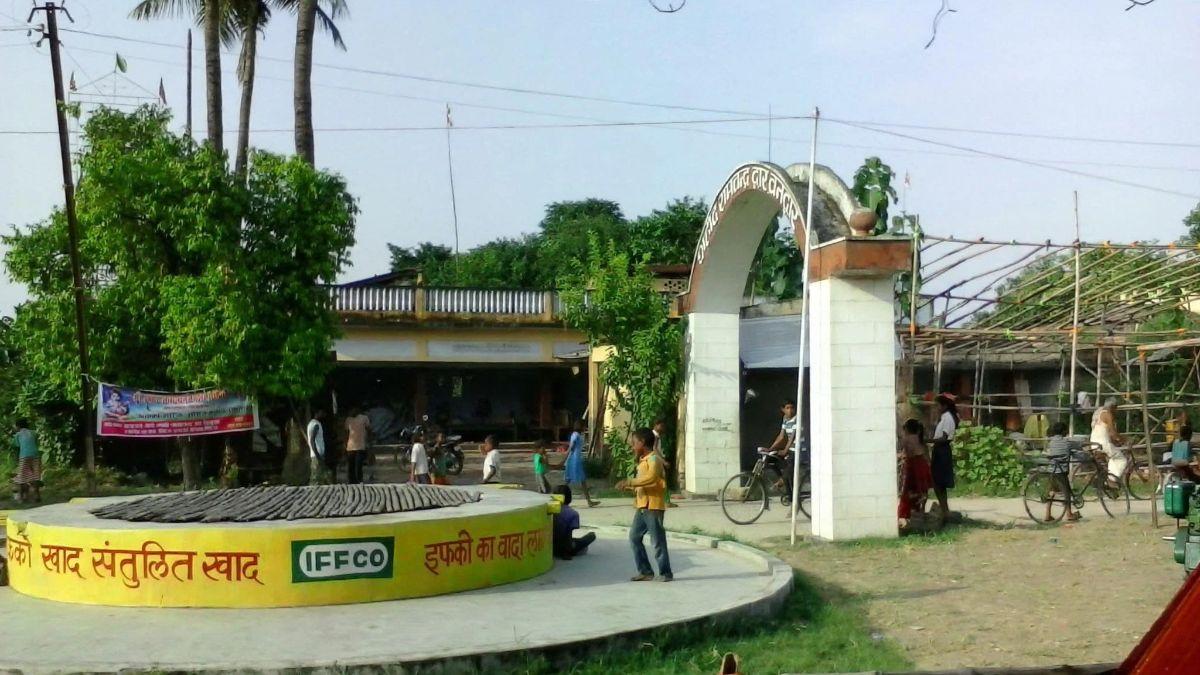
Aerial view of Bandwar village showing the 17 wards in Begusarai, Bihar (2026)
View Full Size
Listen to this article

Narrated in English (Browser TTS)

Bandwar is divided into 17 administrative wards, reflecting a rapidly growing population. While the 2011 Census recorded 12,943 residents, local estimates for 2026 place the population near 22,000. This rapid growth has transformed the village's social fabric, creating a high demand for infrastructure, schools, and healthcare across its numerous Tolas.

The 2011 Baseline

According to the 2011 Census of India, Bandwar had a population of 12,943. This data has been the benchmark for all administrative planning in the village for over a decade. However, anyone walking through the village today can see that this number has grown exponentially. With an estimated 22,000 people now living in Bandwar, the village is no longer a small settlement; it is a bustling rural town.

The 17 Ward Structure

To manage this growing population, Bandwar Gram Panchayat is divided into 17 administrative wards. Each ward elects a Ward Member (Panch) who represents the community in local governance. The village is a tapestry of distinct neighborhoods (Tolas). Wards 1 and 2 encompass the historic Musahri Tola, while Ward 9 covers the populous Kunjartoli. Other major areas include Baraitoli, Dhanuktoli, Punabas, Bharmpura, and the commercial hubs of Chaubatta and Mohra Chowk. The riverine communities reside in Malha and the separate Khatha Tol. The division is not just political; it defines how government schemes, from the Jal Jeevan Mission to local road development, are rolled out.

The Infrastructure Strain

A population jump from 13,000 to 22,000 in a single generation puts immense pressure on the village's resources. The demand for clean drinking water, schooling, and healthcare has outpaced supply. The lack of a Primary Health Centre (PHC) is felt more acutely now than ever. Schools like MS Bandwar and UHS +2 are struggling to accommodate the growing number of children. The tragedy of the 2025 diarrhea outbreak was a harsh reminder of what happens when basic infrastructure cannot keep up with population growth.

The Future

The youth of Bandwar are increasingly moving to cities like Delhi, Punjab, and Bengaluru for education and employment, yet the village population continues to rise. This indicates a high birth rate and a trend of families returning to their roots. Managing the 17 wards efficiently, ensuring equitable distribution of resources across all Tolas, and demanding better infrastructure from the state government will be the defining challenges for Bandwar's panchayat in the coming decade.

Frequently Asked Questions

How many wards are there in Bandwar?
Bandwar Gram Panchayat is divided into 17 administrative wards, each represented by an elected Ward Member (Panch).
What is the current estimated population of Bandwar?
While the 2011 Census recorded 12,943 residents, local estimates for 2026 place the population at approximately 22,000 due to rapid growth.
What are the major Tolas in Bandwar?
Bandwar comprises several distinct Tolas including Musahri, Kunjartoli, Baraitoli, Dhanuktoli, Chaubatta, Punabas, Mohra Chowk, Bharmpura, Malha, and Khatha Tol.

Categories

Read Next

2025 Bandwar Diarrhea Outbreak: Water Crisis and Public Health Failure

In September 2025, a severe diarrhea outbreak in Bandwar village, Begusarai, claimed over 10 lives in 15 days. The crisis was concentrated in Wards 1 and 2 (Mahadalit basti) and exposed the village's lack of clean piped water and sanitation. A health camp at [[gps-bandwar-musahri-school|Musahri Tola]] treated 26 patients and surveyed 293 households, accelerating the demand for the [[jal-jeevan-mission-water-tower-bandwar|Jal Jeevan Mission]] pipeline network.

Health Infrastructure in Bandwar: Sub-Centre vs. PHC Deficit

Bandwar village has only one understaffed health sub-centre and no primary health centre (PHC). For 12,000+ residents, the nearest PHC is at Sadar and the district hospital is 18 km away in Begusarai. With no ambulance service, villagers rely on informal RMPs, ASHA workers, and Anganwadi centres. The September 2025 diarrhea outbreak exposed the deadly consequences of this infrastructure deficit.

The Tolas of Bandwar: Mapping the Village's Social Fabric

Bandwar is not a single, uniform settlement; it is a collective of distinct 'Tolas' (neighborhoods). From the historic Musahri Tola and the bustling Kunjartoli to the riverine communities of Malha and Khatha Tol, each area has its own character. Central junctions like Chaubatta and Mohra Chowk serve as the commercial arteries, binding the village's social fabric together.

MS Bandwar (Rajkiyakrit Madhya Vidyalaya)

MS Bandwar (Middle School Bandwar) is the main government middle school in Bandwar, Begusarai. Established in 1955 (UDISE: 10201008401), it serves Classes 1 to 8 with 669 students, making it the most inclusive school in the village.

Something is incorrect?

If you have additional details, let us know.

Suggest an Edit
Last updated: 2026-11-12Source: Bandwar Village Archive