Bandwar Village Archive

Shri Adi Durga Sthan (Durga Mandir): The Main Durga Temple of Bandwar

The village's historic Durga temple, centre of the annual Durga Puja celebrations
Verified by Bandwar Editor
| 2026-11-03
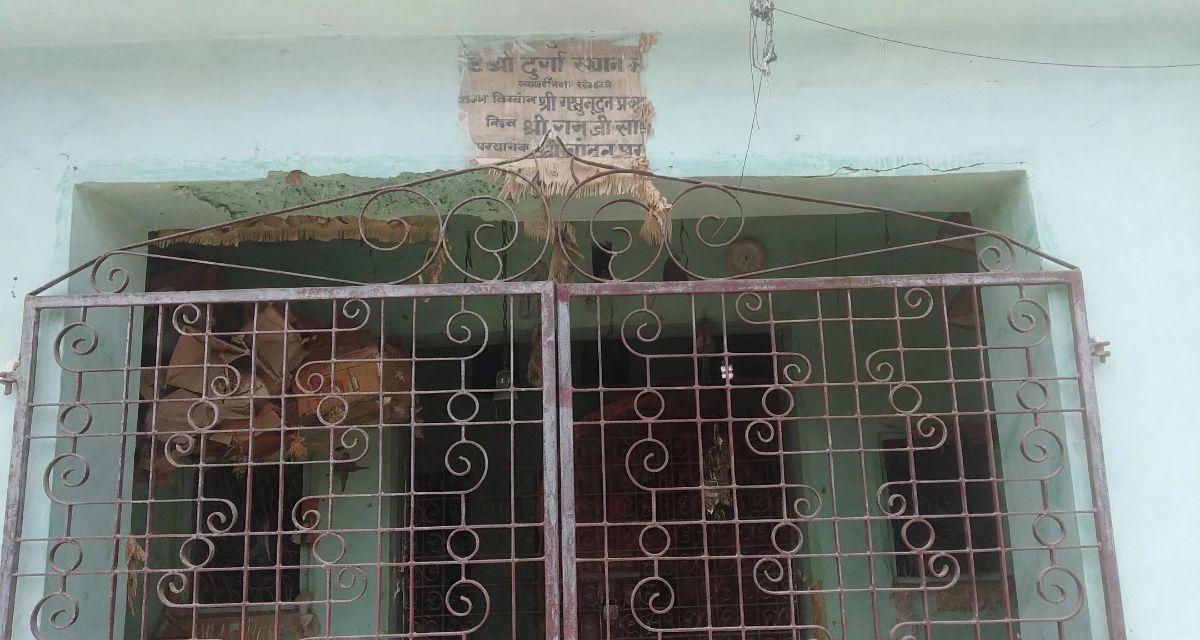
The pale green exterior and iron gate of Shri Adi Durga Sthan in Bandwar.
View Full Size
Listen to this article

Narrated in English (Browser TTS)

Shri Adi Durga Sthan, locally known as Durga Mandir, is the village's principal temple dedicated to Goddess Durga. It is distinct from the [[maharishi-gautam-durga-mandir-bandwar|Maharishi Gautam Aadi Shakti Durga Mandir]], which serves the springtime Chaiti Durga Puja. With its pale green exterior and an ornate iron gate, this temple is the centre of Bandwar's Sharadiya (autumn) Navratri and Durga Puja celebrations.

Overview

Shri Adi Durga Sthan, commonly referred to as Durga Mandir, is the temple in Bandwar where the village observes Sharadiya Navratri and the autumn Durga Puja. It is one of the eight temples clustered in the village centre, and serves as the counterpart to the Maharishi Gautam Aadi Shakti Durga Mandir, which is dedicated to Chaiti Durga. While the Chaiti temple serves the springtime Navratri, this temple is the focus of the village's largest annual celebration in autumn, when the entire village gathers here for nine nights of prayer and festivity.

Architecture & Inscription

The temple has a simple, traditional design. It is painted in a pale sea-green colour, with a prominent iron gate featuring intricate spiral motifs and scrollwork. Above the entrance, a plaque dedicates the shrine to 'Shri Adi Durga Sthan' (श्री आदि दुर्गा स्थान). The inscription also bears historical names associated with the temple's establishment and maintenance, including that of Pandit Gyanandan Shri Narayan Thakur and Gangadhar Prasad. The temple's structure is unassuming but deeply embedded in the village's spiritual landscape, standing in contrast to the whitewashed exteriors of nearby shrines like Shivala.

Durga Puja

Sharadiya Navratri is the temple's most important festival. The nine nights are observed with daily prayers, with the largest gatherings occurring on Saptami, Ashtami, and Navami. On these days, the temple is decorated, and villagers gather for pushpanjali (floral offerings) and bhog distribution. The festival culminates in Vijayadashami, which is celebrated with great community spirit. Like the Janmashtami Mela, Durga Puja here is organised entirely through community effort—volunteers take responsibility for the decorations, lighting, and prasad, ensuring that the festival remains a shared village tradition without the need for external patronage.

Present Day

The temple continues to be a focal point of religious life in the village centre. It stands near Chandrashekhar Chowk and the historic well, making the walk between these sites a central part of daily village life. Together with the Baba Bhole Durgasthan Hanuman Mandir and the Chaiti Durga temple, it forms a dense circuit of shrines that villagers visit in sequence through the year. The iron gate, though weathered by time, remains open to all devotees who come to seek the blessings of Adi Shakti.

Frequently Asked Questions

Where is Durga Mandir located in Bandwar?
It is in the centre of Bandwar village, Begusarai, Bihar, near Chandrashekhar Chowk and the historic well (chaupal). It is one of eight temples clustered in and around the village centre.
What is the difference between this temple and the Maharishi Gautam Aadi Shakti Durga Mandir?
Both are dedicated to Durga, but they serve different festivals. The Maharishi Gautam Aadi Shakti Durga Mandir is a Chaiti Durga temple (spring Navratri). Shri Adi Durga Sthan (Durga Mandir) is the centre of the village's Sharadiya (autumn) Durga Puja celebrations.
What does the plaque above the temple door say?
The plaque above the entrance reads 'Shri Adi Durga Sthan' (श्री आदि दुर्गा स्थान). It also contains historical inscriptions, including names of individuals associated with the temple, such as Pandit Gyanandan Shri Narayan Thakur and Gangadhar Prasad.
When is Durga Puja celebrated at this temple?
Sharadiya Navratri falls in September or October. The nine nights are observed with evening prayers, with the largest gatherings on Saptami, Ashtami, and Navami. The festival concludes on Vijayadashami.
Who manages the temple?
The temple is looked after by the village community. There is no fixed trust or external patronage; festivals and daily upkeep are managed collectively by the villagers.

Read Next

Maharishi Gautam Aadi Shakti Durga Mandir, Bandwar

A Hindu temple in Bandwar dedicated to Durga, with a distinctive orange exterior and green pillars. The temple houses a Chaiti Durga idol and is the site of the village's Chaitra Navratri celebrations. It is Bandwar's Chaiti Durga temple, while the village's other Durga temple, [[durga-mandir-bandwar|Shri Adi Durga Sthan]], serves the autumn Navratri.

Baba Bhole Durgasthan Hanuman Mandir: Multi-Deity Temple of Bandwar

A temple in the centre of Bandwar dedicated to three deities — Baba Bhole (Shiva), Durga, and Hanuman. It is distinguished by its blue-grey shikhara, maroon walls, and an iron gate inscribed with 'Om Namah Shivaya'. It is one of the eight temples clustered in the village centre.

Ram Mandir Thakurbari: The Twin-Shikhara Temple of Bandwar

Bandwar's Ram temple, distinguished by its twin shikharas, is one of the most recognisable structures in the village. It is the site of the annual [[ram-katha-thakurbari-bandwar-2021|Ram Katha]] — the recitation of the Ramcharitmanas — and is especially striking against the evening sky at sunset.

Shivala: The Historic Shiva Temple of Bandwar

Shivala is the village's Shiva temple, standing in the centre of Bandwar, Begusarai, Bihar. It is one of the village's eight temples and has served as a place of worship for generations. Built entirely by village residents, without any government support, it stands in a grove of trees near the [[historic-well-chaupal-bandwar|historic well]] that anchors the village centre.

Historic Well (Chaupal) of Bandwar: The Village Gathering Place

Bandwar's historic well has served as both a source of water and a gathering place — a chaupal — for generations. It was the subject of a feature in Prabhat Khabar in July 2026, which described it as 'still the centre of social dialogue and intellectual discussion in the village'. It sits near [[shivala-temple-bandwar|Shivala]] and the [[chandrashekhar-chowk-bandwar|Chandrashekhar Chowk]], and has been a centre of village life for as long as anyone remembers.

Chandrashekhar Chowk: Memorial of Begusarai's First Communist MLA

A village square in Bandwar with a statue of Chandrashekhar Singh — the first communist MLA from Barauni, and a defining figure in Begusarai's identity as 'the Leningrad of Bihar'. The chowk sits at a crossroads in the village centre, and its statue — under a canopy supported by red stone pillars — has become one of the most photographed features of Bandwar.

Something is incorrect?

If you have additional details, let us know.

Suggest an Edit
Last updated: 2026-11-03Source: Bandwar Village Archive